



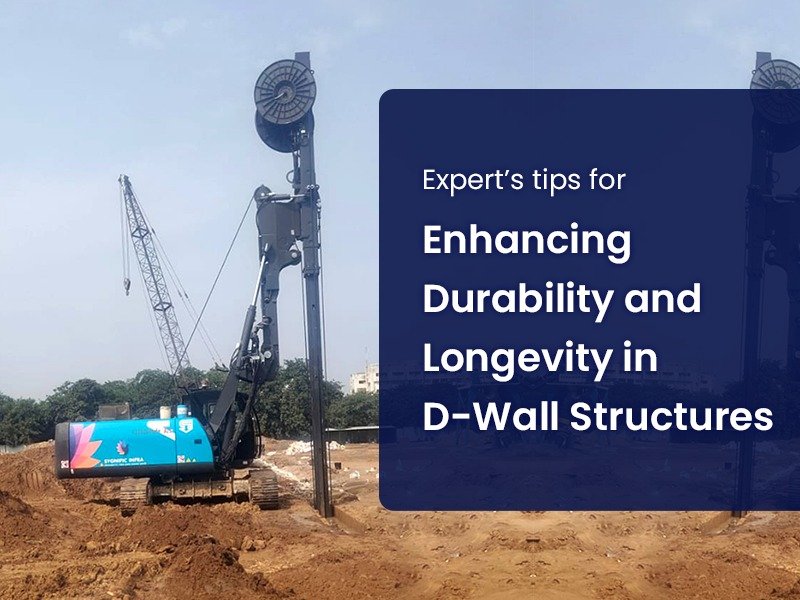
Enhancing Durability and Longevity in D-Wall Structures
Robustness and durability are important factors to take into account when building. Deep basements, underground tunnels, retaining walls, and other infrastructure developments require the support and stability of diaphragm wall constructions, also referred to as D-wall structures.
Understanding D-Wall Structures
The steps involved in constructing D-wall structures are trench excavation, reinforcement bar insertion, and concrete laying. The surrounding soil is stabilized in part by the resistance of the structures and soil to outside pressures like groundwater pressure and lateral earth pressure.
Factors Affecting Durability and Longevity of D-wall
1. Quality of Materials
The quality of the concrete, reinforcing bars, and other building components affects how long D-wall buildings last. Using the highest-quality materials that comply with all relevant laws and specifications is essential.
2. Construction Techniques
Because reinforcement bars are positioned precisely and concrete is poured with care, D-wall constructions are long-lasting and structurally robust.
3. Environmental Conditions
Environmental conditions like moisture and temperature and exposure to chemicals can cause the decay of materials, and D-wall constructions can face the same fate. Using the right materials and performing regular maintenance can help in maintaining the quality of the walls.
4. Ground Conditions
The properties of the soil, the groundwater table, and the seismic activity in the project area can all affect how well D-wall constructions operate. It is easier to build structures that can survive these circumstances when site surveys and comprehensive engineering evaluations are carried out.
Strategies for Enhancing Durability and Longevity of D-Wall
The following tactics can be used to increase the robustness and lifespan of D-wall structures:
1. Use of High-Performance Concrete
You may optimize wall longevity by using high-quality, high-performance concrete because these materials are more resilient to chemical attacks and stay longer. For further longevity, you can also add ingredients like fly ash or silica fume.
2. Proper Reinforcement Detailing
Make sure reinforcement bars are properly detailed and positioned to successfully withstand tensile and shear pressures. To stop corrosion and guarantee structural integrity, proper cover thickness and bar spacing should be kept.
3. Installation of Waterproofing Systems:
Waterproofing membranes or coatings should be put to the exterior of D-wall constructions to stop moisture ingress and chemical exposure. Including suitable drainage systems is a further method of lowering hydrostatic pressure.
4. Monitoring and Maintenance
Create a regular maintenance and observation schedule to identify any damage or deterioration early on. Regular inspection and maintenance are necessary to maintain the strength of the walls.
5. Quality Control
Tight adherence to quality control and assurance procedures is required during the whole building process. D-wall buildings are guaranteed to meet performance standards by routine testing of the materials, strength of the concrete, and structural integrity.
In summary, the success and sustainability of building projects depend on the robustness and lifespan of D-wall systems. Through the utilization of superior materials, appropriate construction methods, and preemptive maintenance strategies, engineers and contractors such as BlueWing DCPL, augment the durability and functionality of D-wall constructions, hence augmenting the security and durability of infrastructure undertakings.