



Precast Construction: Faster, Greener, Better — What Builders Should Know
The construction industry is changing fast. Tight timelines, sustainability goals, rising labor costs, and quality expectations are pushing builders to rethink traditional construction methods. One solution that continues to gain strong momentum is precast construction.
Precast construction offers a smarter way to build — combining speed, sustainability, quality, and cost efficiency. In this blog, we explain what precast construction is, why it matters, and how builders can benefit from adopting it in modern projects.
What Is Precast Construction?
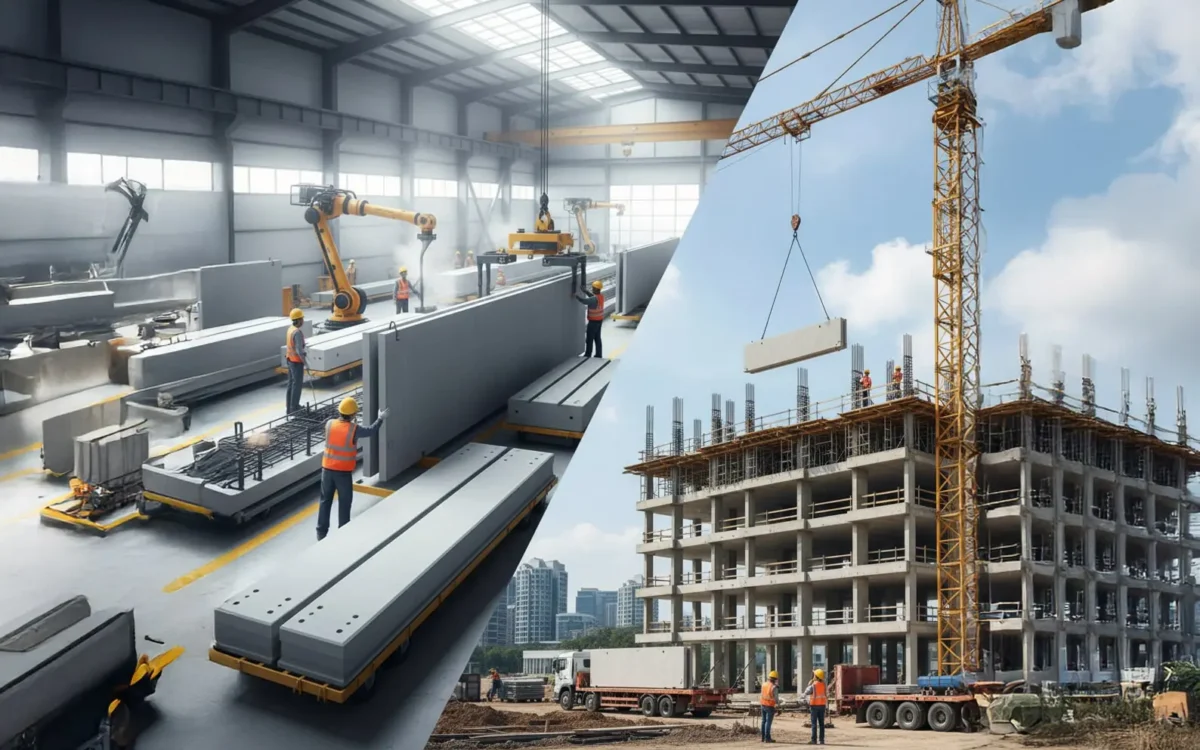
Precast construction involves manufacturing concrete components such as walls, slabs, beams, columns, staircases, and panels in a controlled factory environment. These components are then transported to the site and assembled quickly.
Unlike traditional cast-in-situ construction, precast systems allow better control over quality, accuracy, and timelines, making them ideal for residential, commercial, industrial, and infrastructure projects.
1. Faster Construction: Build More in Less Time
Speed is one of the biggest advantages of precast construction. Since site preparation and component manufacturing happen simultaneously, overall construction time can be reduced by 30–50% compared to conventional methods.
Key Benefits of Faster Delivery
- Earlier project completion
- Faster return on investment (ROI)
- Reduced site disruptions
- Ideal for projects with strict deadlines
For builders and developers, faster delivery often means lower overhead costs and happier clients.
2. Greener Construction: Sustainability Made Practical
Sustainability is no longer optional — it’s a requirement. Precast construction naturally supports greener building practices.
How Precast Supports Sustainability
- Reduced material waste due to precise factory production
- Lower water consumption through recycling systems in plants
- Use of eco-friendly materials like fly ash, slag, and recycled aggregates
- Reduced site pollution and noise
Many precast projects also contribute toward green building certifications such as LEED and IGBC.
3. Better Quality and Long-Term Durability
Factory-controlled production ensures:
- Consistent concrete mix quality
- Proper curing conditions
- Strict inspection and testing before delivery
As a result, precast structures offer higher strength, better finish, and longer service life. They also perform better in harsh weather conditions compared to on-site concrete.
4. Improved Safety on Construction Sites
Since most heavy work is done off-site, precast construction significantly reduces:
- On-site labor intensity
- Risk of accidents related to formwork and wet concrete
- Congestion at construction sites
A safer site means fewer delays, lower insurance costs, and better compliance with safety standards.
5. Cost Efficiency Across the Project Lifecycle
Although precast may appear costlier initially, it often proves more economical in the long run.
Where Builders Save Costs
- Reduced labor requirements
- Minimal rework and wastage
- Faster project completion
- Lower maintenance over time
For large-scale and repetitive projects, precast construction delivers predictable costs and higher profitability.
6. Design Flexibility and Aesthetic Freedom
Modern precast construction is not limited to plain concrete blocks. Builders and architects can achieve:
- Customized shapes and sizes
- Multiple surface finishes and textures
- Integration with MEP and smart building systems
This flexibility allows projects to balance structural strength with modern design aesthetics.
7. The Future of Precast: Technology & Modular Growth
The precast industry is evolving rapidly with:
- Automation and robotics in manufacturing
- BIM-based design coordination
- Modular construction techniques
- Smart sensors embedded in concrete
These innovations make precast a key driver of future-ready, turnkey construction solutions.
Conclusion: Why Builders Should Choose Precast
Precast construction is no longer just an alternative — it’s a strategic advantage.
Key Takeaways
- Faster project delivery
- Environmentally responsible construction
- Superior quality and durability
- Improved site safety
- Long-term cost efficiency
For builders aiming to stay competitive, sustainable, and efficient, precast construction is a smart choice.
FAQs
1. Is precast construction suitable for all types of projects?
Yes. Precast construction is widely used in residential, commercial, industrial, infrastructure, and institutional projects.
2. Is precast construction more expensive than traditional construction?
Initial costs may be slightly higher, but overall project costs are often lower due to faster completion, reduced labor, and minimal rework.
3. How sustainable is precast construction?
Precast construction significantly reduces waste, water usage, and carbon emissions, making it one of the most sustainable construction methods available today.
4. Does precast limit architectural design?
Not at all. Modern precast allows high design flexibility, multiple finishes, and customized components.
5. How does precast support turnkey construction projects?
Precast aligns perfectly with turnkey models by offering predictable timelines, controlled quality, and seamless coordination from design to execution.