



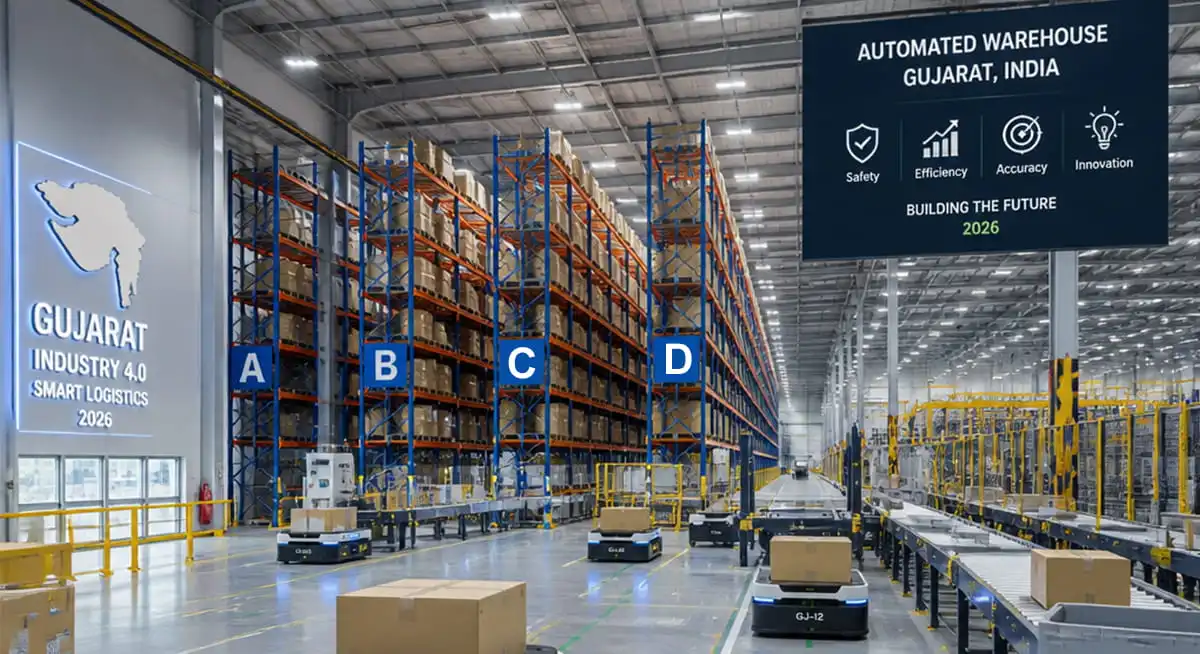
Automation-Ready Warehouse Design Trends Transforming Gujarat’s Industrial Sector in 2026
Gujarat has long been one of India’s strongest industrial powerhouses. From manufacturing hubs to major ports and industrial corridors, the state continues to attract businesses looking for efficient logistics and warehousing solutions. But in 2026, the warehousing industry is no longer just about large storage spaces — it is about smart, automated, and future-ready infrastructure.
Today’s industrial warehouses are being designed to support automation, faster movement of goods, energy efficiency, and real-time inventory management. Developers, contractors, and industrial investors across Gujarat are now focusing on building warehouses that can adapt to modern logistics technologies and growing supply chain demands.
The shift is especially visible around industrial zones connected to Mundra Port, Dholera Special Investment Region, and major cities like Ahmedabad and Surat.
The Growing Demand for Smart Warehouses
The rise of e-commerce, third-party logistics (3PL), quick commerce, and export-driven manufacturing has completely changed warehouse requirements. Businesses today expect faster dispatch systems, better inventory accuracy, and reduced operational costs.
Traditional warehouse structures are slowly becoming outdated because they cannot efficiently support automation technologies such as:
- Robotic material handling
- Automated storage and retrieval systems (ASRS)
- AI-powered inventory tracking
- Smart conveyor systems
- IoT-based warehouse monitoring
As a result, developers are now planning warehouses with automation compatibility from the very beginning of the construction process.
High-Clearance Warehouse Structures
One of the biggest design trends in Gujarat’s industrial sector is the development of high-clearance warehouses.
Modern automated warehouses require greater vertical storage capacity. Taller buildings allow businesses to install advanced racking systems and robotic retrieval equipment that maximize storage within limited land areas.
Many new Grade-A warehouses are now being designed with:
- Higher roof clearances
- Wide column spacing
- Heavy floor load capacities
- Flexible internal layouts
These features help companies improve operational efficiency while reducing long-term expansion costs.
Smart Flooring and Heavy Load Capacity
Automation equipment places continuous movement and pressure on warehouse flooring. This has increased demand for high-strength industrial flooring solutions.
Warehouse developers are investing in:
- Laser screed flooring
- Dust-resistant concrete surfaces
- Flatness-controlled flooring systems
- Durable load-bearing slabs
These flooring technologies improve the performance of automated forklifts, robotic systems, and high-speed material movement equipment.
Energy-Efficient Warehouse Infrastructure
Energy efficiency has become a major priority for industrial projects in Gujarat. Rising electricity costs and sustainability goals are encouraging developers to build greener warehouses.
Modern warehouse projects now commonly include:
- Solar rooftop systems
- Natural ventilation planning
- LED lighting systems
- Rainwater harvesting
- Insulated roofing materials
Green warehouse infrastructure not only reduces operating costs but also improves ESG compliance for multinational clients and investors.
Integration of AI and IoT Technologies
Automation-ready warehouses are increasingly dependent on smart technologies. AI and IoT systems are helping warehouse operators monitor inventory, equipment performance, and movement of goods in real time.
Some of the latest technology integrations include:
- Smart sensors for temperature and humidity monitoring
- AI-based stock forecasting
- Real-time vehicle tracking
- Predictive maintenance systems
- Cloud-connected warehouse management software
These technologies improve operational visibility and reduce manual errors significantly
The Rise of Logistics Parks in Gujarat
Large-scale logistics parks are becoming an important part of Gujarat’s industrial infrastructure growth. Locations connected to highways, ports, and industrial corridors are witnessing strong demand for integrated warehousing developments.
Projects linked to the Delhi–Mumbai Industrial Corridor are creating new opportunities for warehouse developers and construction companies.
Businesses today prefer logistics parks that offer:
- Multi-modal transport connectivity
- Truck terminals
- Container yards
- Office spaces
- Automated loading docks
This trend is driving the construction of larger and smarter industrial ecosystems across the state.
Why Gujarat Is Leading This Transformation
Gujarat offers several advantages that support warehouse and logistics infrastructure growth:
- Strong industrial base
- Excellent road and port connectivity
- Investor-friendly policies
- Expanding manufacturing sector
- Availability of industrial land
With increasing demand from e-commerce, pharmaceuticals, engineering, chemicals, and export industries, the state is expected to remain one of India’s top warehousing destinations over the next decade.
Final Thoughts
The future of warehousing in Gujarat is no longer limited to storage capacity alone. The industry is rapidly moving toward intelligent, automation-ready infrastructure that supports speed, efficiency, and sustainability.
For construction companies, architects, developers, and industrial investors, this transformation presents a significant opportunity. Warehouses designed today must be flexible enough to support tomorrow’s technologies.
As Gujarat continues expanding its industrial and logistics ecosystem, automation-ready warehouse construction will play a major role in shaping the next phase of industrial growth.